The Guide to Building an Effective Internal AI Team for Scale-ups
Hiring an 'AI Engineer' alone is not enough. This guide covers team structure, the roles you actually need, and how to build sustainable internal AI capabilities—not vendor dependency.
1. Common Mistakes When Building AI Teams
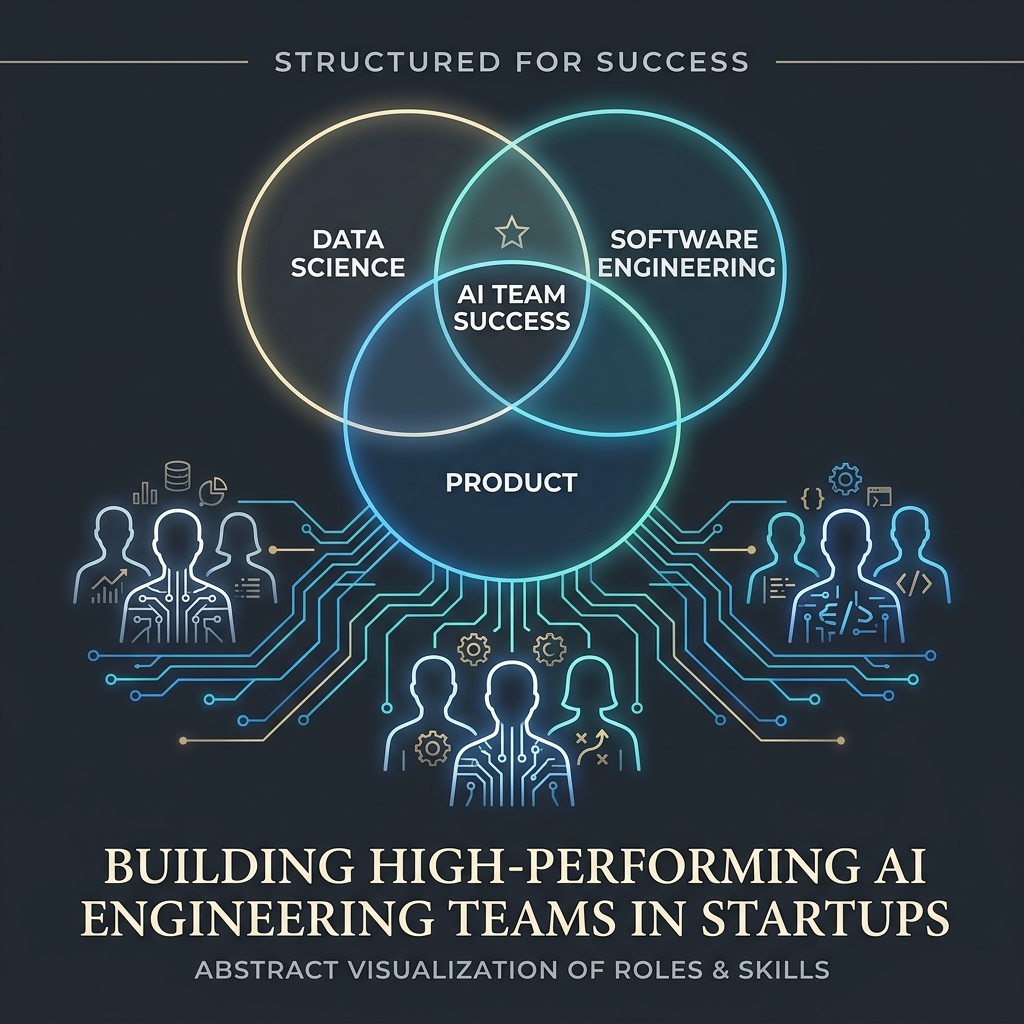
Many companies make a fatal mistake: hiring one 'AI wizard' expecting them to do everything. Effective AI requires at least three distinct roles: a Data Engineer (who prepares data), an ML Engineer (who builds models), and an AI Product Manager (who defines the business problem to be solved).
2. The Minimum Viable AI Team Structure
For scale-ups with limited budgets, the effective minimal structure is: 1 AI Lead (senior, strategy + technical), 1 Backend Engineer with ML capabilities, 1 Data Analyst, and 1 AI-literate Product Manager. Four people can build and operate meaningful AI systems.
3. Build vs. Buy: The Decision Most Companies Skip
Before hiring, answer this question: is the problem you want to solve unique to your business, or could it be solved with existing tools? 80% of corporate AI needs can be addressed with a combination of commercial APIs (OpenAI, Gemini, Claude) without building models from scratch.
4. Transferring Capability from Vendor to Internal
If you use an external AI vendor, ensure there is a knowledge transfer clause in the contract: architectural documentation, internal team training, and full access to the source code. This prevents vendor lock-in and gradually builds independent capability.